The best auto dialer for insurance agents in 2026
The lists that rank for this question compare dialing modes and integrations, then stop at the seat price. An agency pays for something else: a seat it keeps all year whether the producer dials twenty numbers a day or two hundred, plus the leads. I read the pricing page of every tool on those lists today, priced the month at the call volumes agencies actually run, and found the dial count at which each one beats ours.

Insurance auto dialers ranked by real entry cost
The method the cited lists use, applied honestly: the cheapest published plan that actually includes a dialer, multiplied by the vendor’s seat minimum, because a one-producer agency cannot buy one Aircall licence. Annual prices where a vendor offers both, since that is what every vendor advertises.
| Tool | Cheapest plan that dials | Seat minimum | Real entry cost / month | Main caveat |
|---|---|---|---|---|
| DialSheet | Free (500 calls), then Pro | None | $0, then $29 | Twilio minutes billed at cost, ~$0.014/min; month to month |
| CloudTalk | Starter $25 + Power Dialer $15, annual | 1 | $40 | US/Canada calls included; both dialer add-ons (power $15, parallel $39) are annual only |
| PowerDialer.ai | Single Line, 250 minutes | 1 | $45 | unlimited US/Canada calling starts on the $139 Standard tier |
| RingCentral RingCX | RingCX Standard, annual | 1 | $65 | a contact-centre product sold apart from the RingEX phone system; no seat minimum published |
| JustCall | Pro, annual ($69 monthly) | 2 | $98 | two-licence minimum on every plan; unlimited minutes inside a fair-use policy |
| NICE CXone | Omnichannel Suite + Outbound add-on | 1 | $110 | the dialer is an add-on with no published price on every suite; no seat minimum printed |
| PhoneBurner | Standard, annual ($165 monthly) | 1 | $140 | one line per rep; softphone from Professional ($165); SMS on Premium only |
| Ringover | Business, annual | 3 | $141 | 12-month commitment, plus $0.08 a minute for automated dialing |
| Aircall | Professional, annual | 3 | $150 | the power dialer needs Professional; no parallel or predictive mode |
| Dialpad | Sell Premium, annual | 1 | $150 | the Dialpad Dialer is Premium-only, per Dialpad’s own help centre |
| MightyCall | Power, annual ($65 monthly) | 3 | $162 | preview and progressive only; predictive needs Enterprise with 5 users |
| ReadyMode | Starter, 1–4 licences | 1 | $199 | reputation monitoring is iQ-only at $249 with 5 licences |
| Five9 | Core, per concurrent user | 50 | $7,950 | a stated 50-seat minimum |
| Kixie | Single-Line PowerDialer, quote only | — | Quote | no published price; reported about $95–185 a seat |
| CallTools | Quote only | — | Quote | no published price; reported $102–120 an agent plus $500–1,500 setup |
Every price read on the vendor's own pricing page on October 7, 2026, except JustCall (Oct 1), Aircall (Sep 30), Ringover (Sep), RingCX (Sep 13) and PowerDialer.ai (Sep 13), from our last reads; Kixie and CallTools publish none and their figures are reported, not published. Five9's Core price is per concurrent user. Confirm before you buy.
Two prices on the list Google ranks first for this search have moved. It quotes Dialpad’s dialer at about $15 to $25 a user; that is Dialpad’s phone system, and the Dialpad Dialer needs Sell Premium at $150. It quotes NICE CXone from $71; nice.com today lists its suites at $110 to $249 an agent, with Outbound Engagement an add-on on every one.
How much does an insurance dialer cost? The whole month, minutes included
Most of the rivals above put US minutes inside the seat (Ringover’s dialing surcharge and PowerDialer.ai’s 250-minute plan are the exceptions), so their bill is the same whether a producer dials twenty numbers or two hundred. DialSheet bills minutes at Twilio’s rate, so the bill follows the dialing. Three agency shapes, one seat each:
| One seat, per month | DialSheet all-in | CloudTalk + dialer | JustCall Pro (2 min.) | PhoneBurner Standard |
|---|---|---|---|---|
| Producer, 50 dials a day | ~$45 | $40 | $98 | $140 |
| Full-time caller, 200 a day | ~$87 | $40 | $98 | $140 |
| Parallel block, 300 a day | ~$163 | $79 | — | No parallel mode |
Vendor seats on annual billing, read October 7, 2026. DialSheet: Pro ($29) plus that agent's own Twilio from perRepTelephony(): 21 working days, 25% voicemail, 9% connects at 4 minutes, both call legs, one local number; the parallel row adds answering machine detection on every dial.
The aged-lead arithmetic is where agency owners feel it. Aged final expense and life leads sell for about $1 to $5 each depending on vintage (agenttech.io, April 2026). The $111 a month between a PhoneBurner seat and ours buys 22 to 111 more of them, every month, for every producer.

Which dialing mode fits aged leads, quotes and renewals
The cited lists argue modes in the abstract. In an agency each list has its own:
- Fresh direct-mail and web quotes: one line, preview first. A lead you paid $25 or more for deserves the producer reading the card before it rings. DialSheet’s Power Dial shows the lead, the notes and the custom fields from your spreadsheet (Pro) beside the number.
- Quoted-not-closed and renewals: power dialing. One at a time, auto-advance, one-click outcome, callback task on the record. This is the list most agencies never work systematically.
- Aged leads: parallel. At a 9% connect rate a single line spends most of the hour on rings. Parallel dialing rings two to 5 numbers and bridges the first person; detected voicemail greetings are screened out.
- Predictive: only on a floor. Predictive pacing dials ahead of agents and abandons calls when too many answer; it makes sense with dozens of agents and a compliance team watching abandonment rates. DialSheet does not do it.
The longer version, with the abandonment trade-off, is in parallel dialer vs power dialer.

Working an aged lead file without losing its history
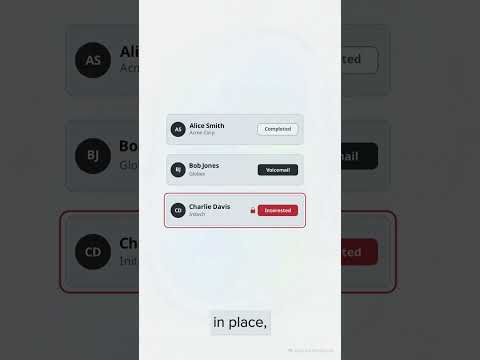
An aged lead gets dialed eight or ten times across months, often by different producers. Tag each file by vintage and source at import, and every dial, outcome and note stays on the record, so attempt seven knows what attempt three heard. A finished call sets the lead to Contacted, Voicemail or No answer by itself, and a producer’s Interested or Callback is never overwritten by a later ring, so the next session filters to the records still worth calling.
The 14 insurance dialers, and what agents complain about
Ratings are G2’s, with their review counts, as tabulated by cloudtalk.io in September 2026 and read today, except Kixie and PhoneBurner, read on G2’s compare page on October 6. DialSheet has no third-party rating yet.
CloudTalk, $40 with the dialer, annual
The cheapest seat that power-dials once a rep is busy: Starter at $25 includes US and Canada calls, the Power Dialer is $15, parallel $39. Both add-ons are annual only, and there is no free plan. G2 4.4 from 1,938 reviews. Its own comparison tells a solo broker making twenty calls a day that most of its list is overbuilt for them.
JustCall, $49 a licence, two minimum
Pro is the plan with the power dialer; every plan needs two licences, so one producer pays $98 on annual or $138 monthly. Unlimited minutes sit inside a fair-use policy. G2 4.3 from 2,370; support responsiveness is the complaint reviewers repeat.
PhoneBurner, $140 a seat
One line per rep, no connect delay, one-click voicemail and follow-up email, unlimited US and Canada calling, and an insurance page of its own. The seat price is the recurring complaint; the softphone starts on Professional at $165 and SMS on Premium. G2 4.7 from 292.
Kixie, quote only
A phone system and power dialer with texting, one line or up to four. No price on any tier; reported about $95 to $185 a seat on annual terms under ten users. G2 4.8 from 866, with call and number issues the most tagged complaints.
Aircall, $50 a licence, three minimum
A clean cloud phone with a power dialer on Professional. A one-producer agency pays for three licences, $150 a month, and there is no parallel or predictive mode. G2 4.4 from 1,532; cost at scale is the complaint.
Ringover, $47 a licence, three minimum
Local numbers in many countries, which suits a cross-border brokerage. Three licences on a twelve-month term, plus $0.08 a minute for automated dialing. G2 4.6 from 462; app bugs and SMS limits are the complaints.
MightyCall, $54 a user, three minimum
Power is the plan with preview and progressive dialing, answering machine detection and local presence: $54 annual or $65 monthly, three users minimum. Predictive needs Enterprise with 5 users.
Dialpad, $150 for the dialer
The $15 and $25 plans other lists quote are Dialpad’s phone system. The Dialpad Dialer is Sell Premium at $150 a user annual. Strong AI transcription; G2 4.4 from more than 4,100.
ReadyMode, $199 a licence
A call-centre dialer the insurance and final expense trade knows well. Starter covers one to four licences, and one or two can now be bought online without a demo. Caller-ID reputation monitoring is iQ-only, at $249 with five licences.
RingCentral RingCX, $65 a user
RingCentral’s phone system (RingEX) has no outbound dialer; RingCX is the separate contact-centre product that does. G2 rates RingEX 4.1 from 1,304, with support quality the complaint.
Five9 and NICE CXone, carrier scale
Five9 Core is $159 per concurrent user with a stated 50-seat minimum, $7,950 a month before the first call. NICE CXone suites run $110 to $249 an agent with the dialer as an add-on. G2 4.1 from 588 (Five9) and 4.3 from 1,728 (NICE); contract rigidity and setup effort are the complaints.
PowerDialer.ai and CallTools
PowerDialer.ai’s $45 plan stops at 250 minutes a month, about 19 producer dials a day; unlimited calling is $139. CallTools publishes no price; reviewers report $102 to $120 an agent plus $500 to $1,500 setup.
Is auto-dialing insurance leads TCPA compliant?
It can be, and the software is the smaller part of it. The TCPA restricts autodialed and prerecorded calls to mobile numbers without prior express consent; the National Do Not Call Registry and state registries cover sales calls to households; states set calling hours; and Medicare marketing adds CMS rules on recording and retention for marketing organisations. Aged leads carry the most risk because the consent is old and the lead was sold more than once.
- Scrub before you import. Run every aged file against the national and state registries, and keep the consent record your lead vendor gave you.
- One Do Not Call list for the whole agency. DialSheet blocks a number on the account-wide list for every producer, and checks it before connecting.
- Record answered calls. Recording is on by default and the files sit in your own Twilio account until you delete them. Mind all-party consent states.
What DialSheet does not do: enforce state calling windows, store consent certificates, or scrub against the federal registry for you. More in DNC and TCPA compliance for cold callers. Orientation only, not legal advice.
Where DialSheet is not the right buy for an agency
- A full-time caller on a one-year contract. Past about 37 dials a day, CloudTalk’s $40 annual seat with US calls included costs less than our seat plus Twilio.
- No predictive pacing. Parallel dialing stops at 5 lines. A floor of fifty wants Five9, ReadyMode iQ or MightyCall Enterprise.
- No inbound phone system. No IVR or service queue. If the renewal and claims line has to ring on the same system, RingCentral, Aircall or CloudTalk do that.
- No agency management system sync. Applied Epic, HawkSoft and EZLynx do not connect natively; leads come in by CSV or the API, and HubSpot is the one native CRM sync.
- No lead data. You bring the aged file, the quote list or the book.
- A Twilio account first, about ten minutes, or the $49/month managed line with 1,500 minutes and Pro included.
For a producer who dials around the book, an agency that will not sign for a year, or a Medicare shop that doubles its headcount for eight weeks, none of those apply, and DialSheet is the cheaper and simpler buy.
If you are buying for an agency team
The team case is arithmetic before it is anything else: PhoneBurner charges the same rate for your tenth rep as your first, so 10 seats is $1,400 a month, while DialSheet is $29 for the first seat and $29 for each one after it, $290 in all, a difference of $1,110 a month that widens every time you hire. What that buys is a product built for teams: assign leads to reps, or let the team work a shared pool, a caller ID per rep, pinned to that rep, shared call scripts, so a new hire opens the same way as the floor, a team dashboard: assigned, connected, meetings booked, no-answers and talk time per rep, over any date range.
- assign leads to reps, or let the team work a shared pool
- a caller ID per rep, pinned to that rep
- shared call scripts, so a new hire opens the same way as the floor
- a team dashboard: assigned, connected, meetings booked, no-answers and talk time per rep, over any date range
- CSV export of the whole stats table
- invite by email with seats managed in one place
| Producers, per month | 1 | 3 | 5 | 10 |
|---|---|---|---|---|
| DialSheet, 50/day each | ~$45 | ~$135 | ~$225 | ~$450 |
| CloudTalk + dialer (annual) | $40 | $120 | $200 | $400 |
| JustCall Pro (annual, 2 min.) | $98 | $147 | $245 | $490 |
| MightyCall Power (annual, 3 min.) | $162 | $162 | $270 | $540 |
| PhoneBurner Standard (annual) | $140 | $420 | $700 | $1,400 |
Same method as above. DialSheet software is $29 for the first seat and $29 for each one after, so $290 for ten.
Who runs on it
An independent insurance agency and a nine-rep calling floor in our published case studies, a customer's own story on its own site, and a third-party listing.
- dialsheet.ioindependent insurance agencyAn insurance agency runs 1,000 calls a month, retained month over month
- dialsheet.ioUK accountancy practiceA UK accountancy practice put a 9-rep outbound floor live in one day
- goodroofing.caHow we book estimatesA Calgary roofer on how a storm-season team calls every homeowner in order, with local numbers and no missed follow-ups. “Our calling runs on DialSheet.”
- mrrnerds.comDialSheet on MRR NerdsMRR Nerds’ DialSheet review: 4.5 of 5, free-forever plan, no seat minimum, month to month, marked “not hands-on tested”.
Which auto dialer should an insurance agency actually buy?
DialSheet
A producer or a small agency that dials around the book, month to month. Free to 500 calls, then $29 a seat; about $45 all-in at 50 dials a day, parallel dialing included, no contract.
DialSheet
A Medicare agency staffing up for AEP. 5 extra agents for 2 months is $290 in software, against $2,400 on annual CloudTalk seats.
CloudTalk
A full-time aged-lead caller who will sign for a year and dial more than 37 a day. Starter plus the Power Dialer add-on is $40 a seat with US and Canada calls included.
Five9 or ReadyMode iQ
A carrier or a predictive floor of fifty agents. Predictive pacing and workforce tools at contact-centre scale; Five9 states a 50-seat minimum.
Insurance dialer questions
What is the best auto dialer for insurance agents?
For an independent agency that wants to dial month to month, DialSheet: free for one person up to 500 calls a month, then $29/month per seat with power dialing, parallel dialing on two to 5 lines, recordings and a built-in CRM, on your own Twilio account. A producer at 50 dials a day pays about $45 a month all-in. For a full-time caller who will sign a one-year contract, CloudTalk Starter plus its Power Dialer add-on is cheaper at $40 a seat with US and Canada calls included, once a rep passes about 37 dials a day. For a predictive floor of 50 or more, Five9 or ReadyMode iQ. Prices read October 7, 2026.
What is the best dialer for life insurance agents?
Life and final expense agents work aged leads that cost $1 to $5 each and answer rarely, so a dialer that rings several lines at once does the most work. DialSheet Pro includes parallel dialing on two to 5 lines with voicemail screening at $29/month per seat; one agent at 300 parallel dials a day is about $163 a month all-in on their own Twilio, answering machine detection included. CloudTalk sells the same mode as a $39 add-on on an annual seat, which comes to $79 with minutes included and is cheaper above about 110 parallel dials a day. Scrub every aged file against the National DNC Registry first.
How much does an insurance dialer cost?
Published entry prices on October 7, 2026 run from DialSheet's $0 free plan and $29 seat to $40 for CloudTalk with its dialer add-on, $98 for JustCall's two-licence floor, $140 for PhoneBurner, $150 for Dialpad Sell Premium, $199 for ReadyMode Starter and $7,950 a month for Five9's 50-seat minimum. Kixie and CallTools publish nothing. Most rivals bundle US minutes into the seat; DialSheet bills them at Twilio's rate, ~$0.014/min, so one producer at 50 dials a day is about $45 all-in and a full-time caller at 200 about $87.
Is auto-dialing insurance leads TCPA compliant?
It can be, and the dialer is not what makes it so. The TCPA restricts autodialed and prerecorded calls to mobile numbers without prior express consent, the National Do Not Call Registry and state registries apply to sales calls to households, and states set their own calling hours. Scrub every aged file before you dial it, keep each lead's consent record, and honour opt-outs on the call. DialSheet keeps an account-wide Do Not Call list that blocks a number for every rep and records answered calls into your own Twilio account; it does not enforce state calling windows for you. This is orientation, not legal advice.
What dialer should a Medicare agency use for AEP?
One you can staff up and down with the season. Medicare's Annual Enrollment Period runs October 15 to December 7, and annual seat contracts make you pay November headcount in February. On DialSheet a seat is $29 a month with no contract, so 5 extra agents for the 2 months of AEP cost $290 in software, against $2,400 for 5 annual CloudTalk dialer seats and $8,400 on PhoneBurner. Calls to Medicare beneficiaries carry CMS recording and retention rules for marketing organisations; recordings stay in your own Twilio account, but confirm the current CMS requirement with your FMO or compliance team.
Is there a free auto dialer for insurance agents?
Yes. DialSheet is free for one person, with a list of up to 500 leads and 500 calls a month, with no card and no time limit, on your own Twilio account. A producer who stays inside 500 calls a month, about 24 a working day, pays no software and roughly $8 a month in Twilio usage. Teams and parallel dialing start on Pro at $29/month per seat. Most insurance dialers offer a trial instead: CloudTalk 14 days, Kixie 7 days, and PhoneBurner, Aircall and MightyCall no free plan.
Vendor prices and plan contents from each vendor’s own pricing page on October 7, 2026 unless the table caption says otherwise; Kixie and CallTools publish none. G2 ratings as tabulated by cloudtalk.io (September 2026) and, for Kixie and PhoneBurner, G2’s compare page on October 6, 2026. Aged-lead prices from agenttech.io (April 2026). Twilio figures are US list rates billed to you by Twilio. Compliance notes are orientation, not legal advice. We build DialSheet, so weigh this as a disclosed first-party comparison.