Parallel dialer vs power dialer: which one your list actually needs
The pitch for a parallel dialer is one-sided: dial four numbers at once, talk to more people, hit quota. The half that stays off the vendor page is the calls it drops, the hello it delays, and the federal 3% rule that decides whether running four lines is legal for the calls you make. Here is the whole thing, with what each mode costs.

Pricing both modes across fifteen vendors, with each seat minimum applied, is on the cheapest parallel dialer in 2026; the single-line side is on the cheapest power dialers, and the full ranking on the best power dialer software.
What actually changes when you add lines
Both are automatic dialers: you upload a list and they dial it so nobody is typing numbers. The single difference is how many calls are in flight. A power dialer keeps exactly one live. It rings a number, and the moment you hang up or log an outcome it dials the next row, so you are present for every ring and your hello lands with no lag.
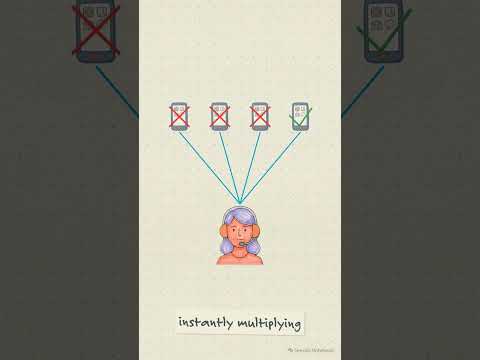
A parallel dialer rings several numbers at the same time for one rep. Most of those rings reach voicemail or nobody, so on average one becomes a live human, and the system bridges you to that person while hanging up the rest. The speed comes from the machine absorbing the dead air instead of you. Every downside comes from the same place.
| Power dialer | Parallel dialer | |
|---|---|---|
| How it dials | One number at a time, and you are already on the line | Several numbers at once, commonly two to five lines per rep |
| Typical dials an hour | ~30–40 | ~150–300 |
| Live conversations an hour | ~3–4 | ~8–12 |
| Dropped and abandoned calls | Essentially none: one call, one rep | Structural: when two people answer together, one gets dead air |
| Your hello | Instant | A beat late while the system bridges you to whoever answered |
| Abandoned-call exposure | Very low | Real, and capped at 3% of live answers (120 a month on 4,000 connects) |
| Caller-ID reputation | One number, paced volume | Volume per number climbs, and dropped calls feed the spam analytics |
| Best for | Warm, high-value, relationship calls | Cold, cheap lists that mostly ring out |
| Who should run it | Anyone, any experience level | Experienced reps who can handle a fast, imperfect connect |
Throughput figures are commonly cited 2026 industry ranges and move with list quality, answer rate and line count. Treat them as planning ranges. The abandoned-call figure is arithmetic on the FCC cap, not a range.
The dropped-call problem nobody selling parallel explains
This is the mechanic that decides whether multi-line dialing is a good tool or a liability for your business. Run four lines and, every so often, two people answer in the same second. You can talk to one. The other gets dead air and a hang-up. Under FCC telemarketing rules that is an abandoned call: one not connected to a live rep within two seconds of the person's completed greeting. Abandoned calls are capped, hard.
The exposure is rarely a regulator. It is the plaintiff's bar, which works from call records and statutory damages per call, and a documented pattern of abandoned calls is what those claims are built on. None of that makes parallel dialing wrong. It makes it a tool with a throttle you have to hold. The second cost is quieter: dropped calls feed the carrier analytics that decide whether your caller ID shows as Spam Likely, so aggressive multi-line dialing can lower the connect rate it was bought to raise. See how many calls a day before Spam Likely and are parallel dialers legal.
What each mode costs, including the minutes
Parallel dialing costs more than the licence, because three lines ring three times as many numbers and your carrier bills every leg that connects. Here is the same rep on one line and on three, on a Twilio account, with both call legs counted:
So a rep who switches to three lines for the cold half of the week adds roughly $69 more in telephony a month than power dialing, with both modes included in Pro. That is the honest total: about $133 a month for one rep dialing 390 numbers a day on three lines, software and minutes together. The same rep on a Mojo triple-line seat is $149 of licence with minutes bundled, and on Orum it is ~$250+/user/mo with a nine-seat minimum. Full rate card in Twilio cold calling cost.

Which one fits your calls: a 30-second decision tree
1. Is the list warm, high-value or relationship-driven?
Inbound leads, referrals, past customers, a short named-account list: power dialer. You want to be present and sharp on every connect, and you cannot afford to drop a good one.
2. Is it a big, cold, cheap list that mostly will not answer?
Aged data, thousands of records, an answer rate under about 10%, volume is the whole game: parallel, at two or three lines to start, with voicemail screening on.
3. Are the reps new, or the call complex or regulated?
Onboarding SDRs, technical B2B, insurance, lending, anything with a script and a disclosure: power dialer. The seconds between calls are a feature, and you stay well clear of the abandoned-call line.
4. Do you have both kinds of list? Most teams do.
Then the answer is both, switched per list, and the buying question is what the second mode costs. Here it is included in every Pro seat. Elsewhere it is a higher tier, a separate SKU, or a second tool.
How the vendors package the two modes
The comparison people actually need is not which mode is better in the abstract. It is what each vendor charges to have the one you need on the day you need it. Read from each vendor's own pricing page in September 2026:
| Tool | Power dialing | Parallel or multi-line | What the second mode costs |
|---|---|---|---|
| DialSheet | Every plan, including free | 2–5 lines with voicemail screening included in Pro on your own Twilio, 3 included on a verified DialSheet line | $29 a seat, both modes included |
| Mojo Dialer | Single-line licence | Triple line, up to 300 calls an hour claimed | $139 licence instead of $89, plus $10 Agent Access |
| CloudTalk | Dialer add-on below Expert | Parallel dialing add-on, annual billing only | ~$39/user/mo on top of a dialer tier |
| BatchDialer | Preview dialer | 3 lines an agent on Starter, 5 on Pro | Included in ~$95–199/agent/mo (annual; $119–249 monthly) |
| Kixie | Single-line power dialer | Multi-line PowerDialer, up to 4 lines, top tier | Top tier, quote-only since mid-2026 |
| Orum | Not the product | AI parallel dialing up to 10 lines | ~$250+/user/mo, 9-seat minimum |
| Nooks | Not the product | AI parallel dialing with coaching | ~$100–200/user/mo (reported; Nooks publishes no price), quote-only |
| Aircall, PhoneBurner | Yes | Neither sells multi-line parallel dialing | Not available at any price |
Competitor figures are published list prices read in September 2026, approximate and for comparison rather than quotes. Kixie stopped publishing prices in 2026. DialSheet's figures are our own published prices.
The Aircall row is the one people query most, because “aircall parallel dialer” gets typed a lot and the answer is that no such thing exists at any tier. What Aircall does sell is a sequential browser-extension dialer on its Professional plan, priced and pulled apart in Aircall Power Dialer cost.
If you are buying for a team
The team case is arithmetic before it is anything else: the multi-line vendors charges the same rate for your tenth rep as your first, so 10 seats is $500 a month, while DialSheet is $29 for the first seat and $29 for each one after it, $290 in all, a difference of $210 a month that widens every time you hire. What that buys is a product built for teams: assign leads to reps, or let the team work a shared pool, a caller ID per rep, pinned to that rep, shared call scripts, so a new hire opens the same way as the floor, a team dashboard: assigned, connected, meetings booked, no-answers and talk time per rep, over any date range.
- assign leads to reps, or let the team work a shared pool
- a caller ID per rep, pinned to that rep
- shared call scripts, so a new hire opens the same way as the floor
- a team dashboard: assigned, connected, meetings booked, no-answers and talk time per rep, over any date range
- CSV export of the whole stats table
- invite by email with seats managed in one place
One thing matters more than the rest when a team runs parallel lines: a caller ID pinned per rep. Multi-line dialing pushes volume through whatever number it dials from, so two reps sharing one caller ID burn it twice as fast, and a burned number answers worse than no number. Pin one per rep, warm them, and watch the per-rep connect rate in the dashboard rather than the dial count.
Who runs on it
Production numbers from teams running these modes, a customer telling the story on their own site, and a third-party listing.
- dialsheet.iotwo-seat property acquisition teamA two-seat acquisition team sustains 8,200 dials a month on $29 software
- dialsheet.ioUK accountancy practiceA UK accountancy practice put a 9-rep outbound floor live in one day
- goodroofing.caHow we book estimatesA Calgary roofer on how a storm-season team calls every homeowner in order, with local numbers and no missed follow-ups. “Our calling runs on DialSheet.”
- mrrnerds.comDialSheet on MRR NerdsMRR Nerds’ DialSheet review: 4.5 of 5, free-forever plan, no seat minimum, month to month, marked “not hands-on tested”.
Which dialing mode should you actually buy?
Most outbound teams, most days
A power dialer. One line, nothing dropped, no delayed hello, nothing to abandon. On DialSheet that is every plan including the free one, free for one person, with a list of up to 500 leads and 500 calls a month.
A team with warm and cold lists
DialSheet, both modes. $29 a seat: power and parallel dialing included. Cheaper than a second tool and switchable per session.
A funded SDR floor above 5 lines
Orum or Nooks. ~$250+/user/mo and ~$100–200/user/mo (reported; Nooks publishes no price). Their answer detection and coaching are better than ours and they run more lines. We do not compete there. For what Orum’s nine-seat floor costs next to a single-line Aircall seat, see Aircall vs Orum, and for Nooks against the same seat, Aircall vs Nooks. The quotes themselves are broken down on Orum pricing and Nooks pricing.
A real estate or wholesaling shop wanting data with it
Mojo or BatchDialer. Multi-line plus the lists in one invoice. Priced in the best dialer for wholesaling.
Regulated calling where a dropped call is unacceptable
A power dialer, whoever sells it. The 3% cap is a ceiling, not a target. If your risk tolerance is zero, do not run parallel lines at all, and use power dialing instead.
A floor that needs pacing across agents
A predictive dialer, which is a different thing again: ReadyMode or BatchDialer. The distinction is in power vs auto vs predictive.
Parallel vs power questions people actually ask
What is the difference between a parallel dialer and a power dialer?
A power dialer places one call at a time with the rep already on the line, dialing the next record the moment the last outcome is logged: roughly 30 to 40 dials and 3 to 4 conversations an hour, and it never abandons a call because it never places one it cannot staff. A parallel dialer rings two to five numbers at once for a single rep, screens out the voicemails and bridges the rep to the first human: roughly 150 to 300 dials and 8 to 12 conversations an hour, at the cost of a delayed hello and a structural risk of dropping the second person who answers. DialSheet, which we build, does both: power dialing on every plan including the free one, and parallel dialing of two to 5 lines included in Pro for accounts on their own Twilio, so $29 a seat covers both modes.
Is a parallel dialer better than a power dialer?
It is faster, which is not the same thing. Parallel dialing wins on cheap, low-answer lists where the rep would otherwise spend the hour listening to ringing. It loses on warm, high-value and regulated calls, where a delayed hello costs you the conversation and a dropped call costs you more than that. The deciding number is your answer rate: the better your list answers, the more often two people pick up at once, and the sooner multi-line dialing pushes you toward the 3% abandoned-call cap. Our own highest-volume account, a two-person US property acquisition team, sustains ~195 dials per person per working day on a single line, which is more than most parallel-dialer marketing promises.
Is a parallel dialer legal and TCPA compliant?
Parallel dialing itself is legal, and it sits closer to the compliance edge than power dialing. Because it places more simultaneous calls than one rep can answer, it structurally produces abandoned calls, and FCC telemarketing rules (47 CFR 64.1200) cap those at 3% of the calls answered live by a person, measured over a rolling 30-day period per campaign: 120 calls on a month with 4,000 live answers. A call counts as abandoned if a live rep is not on the line within two seconds of the person's completed greeting. Separately, most parallel dialers dial an uploaded list rather than generating numbers, so they are arguably outside the ATDS definition the Supreme Court set in Facebook v. Duguid (2021), but the abandoned-call rule applies either way. This is general information, not legal advice; confirm the rules for your calls and states with a compliance professional.
How many lines should a parallel dialer use?
Two or three for most lists. Two or three captures most of the idle-time saving while keeping double-answers manageable, and the more lines you run the more often two prospects pick up in the same second and one of them gets dead air. Tie the line count to the answer rate rather than to the plan you bought: a list answering 3% tolerates more lines than one answering 15%. DialSheet tops out at 5 lines on your own Twilio account. A DialSheet-managed line includes up to 3 lines once Twilio verifies the business and the setup checks pass.
How much does a parallel dialer cost?
On DialSheet, Pro includes parallel dialing at $29 a seat a month for power and parallel dialing together, plus your own Twilio at ~$0.014/min a US minute. Elsewhere it is usually a different product or a higher tier: a Mojo triple-line licence is $139 a month per dialing agent plus $10 Agent Access, CloudTalk sells parallel dialing as a further ~$39 per user per month billed annually on top of a dialer tier, BatchDialer includes 3 to 5 lines an agent in plans at ~$95–199/agent/mo (annual; $119–249 monthly), and the dedicated AI parallel dialers are ~$250+/user/mo (Orum, 9-seat minimum) and ~$100–200/user/mo (reported; Nooks publishes no price) (Nooks). Prices read from each vendor's own pricing page in September 2026.
Can I switch between power dialing and parallel dialing?
On DialSheet, yes, per list and per day: power dialing is on every plan including the free one, and Pro includes parallel dialing. The rep picks the mode when starting a session. Both modes cost $29 per seat, with Twilio usage billed separately: elsewhere, switching usually means buying a different product or a higher tier, and on Aircall or PhoneBurner it means not switching at all, because neither sells multi-line parallel dialing.
Dials-per-hour and conversation figures are published 2026 industry ranges and move with list quality, answer rate and line count; plan a range rather than a guarantee. Competitor prices are published list prices read in September 2026 and may have changed. Compliance points, including the FCC 3% abandoned-call rule (47 CFR § 64.1200) and the ATDS definition from Facebook v. Duguid, are general information rather than legal advice; confirm the rules for your calls, states and consent posture with a qualified professional. DialSheet is our product.