What is a power dialer?
Every definition of this term on the first page of Google is written by a vendor, and every one of them stops before the part a buyer actually wants: what it costs to run one. This page does the definition in a paragraph and then spends the rest of its length on the four questions Google itself says people ask next.

How does a power dialer work?
Mechanically there are four moving parts, and every power dialer on the market has the same four:
- A list. Leads come from a CSV, a CRM or an API, in the order you want them called. The dialer holds the queue, so a rep never chooses who is next.
- A carrier. Something has to place the call. Bundled tools buy the minutes and resell them inside the seat price; bring-your-own-carrier tools place the call on your own Twilio or SIP account, which is why their software can be free.
- A softphone in the browser. The rep’s audio runs through the browser tab rather than a desk phone or an installed app, which is what lets the software hang up and dial again without a human touching anything.
- Dispositions. One click logs what happened — interested, not interested, voicemail, no answer, callback — writes it to the lead record and advances the queue. This is the part that makes the automation worth having; dialing quickly into a list you cannot report on is just noise.
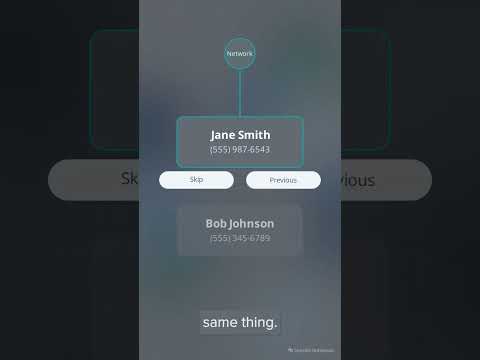
The rep’s actual loop is: the number rings, they talk or they do not, they press one key, the next lead is on screen and already ringing. Nothing else happens between calls. A ring that nobody answers is dropped after a fixed timeout and the queue moves on.
What is the difference between an auto dialer and a power dialer?
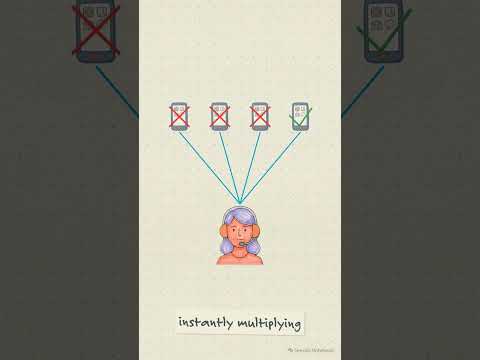
“Auto dialer” is the umbrella term. A power dialer is one kind of auto dialer, and the distinction between the kinds is a single number: how many lines are open per rep.
| Type | Lines per rep | Can it abandon a call? | Bought by |
|---|---|---|---|
| Manual / click-to-dial | 1, dialed by hand | No | Anyone with a phone and a list |
| Power dialer | 1, dialed automatically | No | Outbound sales teams working a named list |
| Parallel dialer | 2 to 4, held for one rep | Only if two answer at once | High-volume SDR teams chasing connect rate |
| Predictive dialer | Several, pooled across available reps | Yes, by design | Call centres with enough volume to forecast |
The abandonment column is the one that carries legal weight: a call placed with nobody to take it is an abandoned call, and abandoned calls are what regulators count.
People also use “progressive dialer” for what this page calls a power dialer, and some vendors use “power dialer” loosely for a parallel one. If you are comparing products, ignore the label on the box and ask how many lines it opens per rep, because that is what changes both the connect rate and the compliance picture.
How much do power dialers cost?
Two lines, not one. The seat price is what every comparison publishes; the telephony is what almost none of them do, and at real dial volumes it is the line that decides which model is cheaper.
| Setup | Software | Telephony | All in |
|---|---|---|---|
| DialSheet free, one person | $0 | ~$10 | ~$10/mo |
| DialSheet Pro × 3, own Twilio | $87 | ~$66 | ~$153/mo |
| PhoneBurner Standard × 3 | $420 | Bundled into the seat | ~$420/mo |
| Aircall Professional × 3 | $150 | Bundled into the seat | ~$150/mo |
| Kixie Single-Line, reported × 3 | No published price | Bundled into the seat | No published price |
Telephony from perRepTelephony(): billed PSTN minutes at $0.014, the browser leg at $0.004 (which bills unanswered ringing too), one local number at ~$1.15/month, 25% voicemail, a 10% connect rate, 3-minute conversations, 21 working days. Rival seat prices are list prices read from each vendor's own pricing page in September 2026, billed yearly where that is the cheaper rate.
Are power dialers illegal?
No, and the reason is the same one-line-per-rep design. A power dialer never places a call it has nobody to staff, so it does not produce abandoned calls, and the abandoned-call rules that constrain predictive dialing — in the US, the FTC’s 3% cap measured across a campaign — have nothing to bite on. That is precisely why plenty of teams choose power dialing over predictive dialing even though it connects fewer calls an hour.
What is unchanged by the dialing mode is everything about who you call and when: the national Do Not Call registry and state registries in the US, TPS and CTPS in the UK, state calling-hour windows, and the consent rules that apply to calls placed to mobiles with an automatic telephone dialing system. Number reputation is a separate practical matter again — dialing a list hard from one unregistered number is how a line ends up labelled “Spam Likely,” whatever software placed the calls.
Who should use a power dialer, and who should not
- Worth it from about 50 dials a day. Below that the setup costs more attention than the saved minutes are worth, and click-to-dial from a CRM is enough.
- Worth it when the list is the constraint. If you have more names than hours — an acquisition team working a county, an agency calling a bought list, a practice calling its own lapsed clients — throughput is the whole game.
- Worth it when you need the call log to be real. Dispositions, recordings and outcome counts come free with the automation, and they are what makes a calling floor coachable.
- Not for inbound. A power dialer places calls; it does not run a support queue, an IVR menu or a shared inbox. CloudTalk, Aircall and RingCentral are built for that and this category is not.
- Not for a handful of high-value calls a week. If you make ten calls to ten named people, the queue is your own head and the software is overhead.
- Not a substitute for a list. No dialer finds prospects. It calls the ones you already have, faster.
Who runs on it
Teams running power dialers in production, with their own numbers on our customer pages and one story on a customer's own site.
- dialsheet.ioUK accountancy practiceA UK accountancy practice put a 9-rep outbound floor live in one day
- dialsheet.iosolo business-funding deskA solo funding broker dials every single week — 1,335 calls last month
- goodroofing.caHow we book estimatesA Calgary roofer on how a storm-season team calls every homeowner in order, with local numbers and no missed follow-ups. “Our calling runs on DialSheet.”
Common questions
What is a power dialer in simple terms?
A power dialer is software that dials a list of phone numbers for you, one at a time, and starts the next call the moment you finish the last one. It keeps one line open per rep, so whoever answers always gets a live person — nothing is dialed that a rep is not ready for. The rep's job becomes talking and logging outcomes instead of reading a number off a spreadsheet and typing it into a phone. Typical software prices run from $0 (DialSheet's free plan, one person, 500 calls a month) to about $140 a user a month for PhoneBurner, plus telephony in every case.
What is power dialing?
Power dialing is the calling method: working a list sequentially with the dialing itself automated, rather than dialing each number by hand or letting software dial several at once. One line is open per rep at a time. In practice it roughly doubles the conversations a rep gets from an hour, because the 30 to 60 seconds between calls — find the next row, read the number, dial it, log the last one — is where most of a manual dialing hour actually goes.
What is the difference between an auto dialer and a power dialer?
"Auto dialer" is the umbrella term for any software that dials for you; a power dialer is one specific kind of auto dialer. The distinction that matters is lines per rep. A power dialer opens one line per rep and never dials a number nobody is ready to take, so no call is ever abandoned. A predictive dialer opens several lines per available rep and drops the ones it cannot staff, which is why the FTC caps abandoned calls at 3% of a campaign in the US. A parallel dialer sits between them: several lines, but held for one named rep rather than pooled.
How much does a power dialer cost?
Software runs from $0 to about $185 a user a month, and telephony is a separate line almost every comparison leaves out. DialSheet is free for one person up to 500 leads and 500 calls a month, then $29/month per seat, with calls billed to your own Twilio account at ~$0.014/min plus ~$1.15/month for a number — about $10 a month at 34 dials a day and $41 at 150. Bundled tools fold the minutes into the seat instead: PhoneBurner from $140 a user billed yearly, CloudTalk from $40, Aircall from $50 on the tier with the dialer and a three-seat minimum. Kixie publishes no price at all.
Are power dialers illegal?
No. Power dialing is legal in the US and the UK, and it is the dialing mode built specifically to avoid the rules that constrain the others: because one line is open per rep, a power dialer does not abandon calls, so the FTC's 3% abandonment cap and the associated abandoned-call rules do not bite. What still applies is everything about who you call and when — the national Do Not Call registry in the US, TPS and CTPS in the UK, state calling-hour rules, and consent requirements for any call placed to a mobile with an automatic telephone dialing system. This is general information rather than legal advice; check your own obligations for the lists you call.
Do I need a power dialer to cold call with Twilio?
Twilio gives you the carrier, not the workflow: an account, a number and an API, with no lead list, no call queue, no dispositions and no browser dialer. A power dialer is the layer that turns that into a rep clicking once and working a list. DialSheet is free for one person on your own Twilio account, so the whole bill at 34 dials a day is about $10 a month of Twilio usage and nothing else. Building the same thing yourself is a few days of work plus the same Twilio bill, and you own the maintenance.
DialSheet figures are computed from our published pricing and Twilio’s US voice rates rather than typed in, so they cannot drift from /pricing. Rival prices are list prices read from each vendor’s own pricing page in September 2026 and are for comparison, not quotes. We build DialSheet, which is why the cost section prices our own model against the bundled one rather than only describing it.