Medicare call recording requirements: what to record, how long to keep it, and what it costs
The retention rule changed on October 1, 2026, two weeks before AEP opened, and most of the pages that rank for it still say 10 years. Every rule below was read today on eCFR and in the Federal Register, with the paragraph number beside it.

Which Medicare calls have to be recorded
The rule sits in the contract terms CMS requires between Medicare Advantage plans and the third-party marketing organizations that sell for them. A TPMO is any organization or individual, “including independent agents and brokers,” paid for lead generation, marketing, sales or enrollment in the chain of enrollment (42 CFR 422.2260). Read on eCFR, current to November 2, 2026:
| Call | Record it? | Where it comes from |
|---|---|---|
| Marketing or sales call about an MA or Part D plan, inbound or outbound | Yes, in its entirety | 422.2274(g)(2)(ii); 423.2274 for Part D |
| A Zoom or other web meeting with audio | Yes, the audio portion | 422.2274(g)(2)(ii) |
| The enrollment portion of a telephonic enrollment | Yes, kept 10 years as the enrollment record | 91 FR 17583 preamble; 422.504(e)(1)(iv) |
| A Medicare Supplement (Medigap) sale | Not under this rule; check your carrier | Medigap is state-regulated |
| A Medigap call that turns into an MA or Part D discussion | Yes, from the start | 422.2274(g)(2)(ii) |
| Calls about auto, home or life policies | Not under this rule | Outside Parts 422 and 423 |
42 CFR 422.2274 and 423.2274 as amended at 91 FR 17583 (April 6, 2026), read on eCFR November 4, 2026. Your carrier or FMO contract can be stricter.
In-person appointments are a separate question that the regulation text does not answer on its own; FMO guidance differs, so follow the carrier you are appointed with.
How long to keep Medicare call recordings: 6 years, not 10
- Years 1 to 3: audio. “For the first 3 years of the retention period, records must be maintained in audio format.”
- Years 4 to 6: audio or transcript. Records “may be maintained in either audio format or as complete and accurate transcript recordings.”
- Enrollments: 10 years. The final rule says it changes only the marketing and sales portions; on a phone enrollment the recording of the enrollment portion “serves as the enrollment form,” and enrollment records stay on the 10-year clock.
What six years of recordings cost to keep
Storage is the part nobody prices. Twilio bills $0.0025 a recorded minute once and $0.0005 for every stored minute every month after, so the storage bill grows each month you keep recording. The table assumes the same number of recorded minutes every month; put in your own.
| Recorded minutes a month (example) | Recording fees, 6 years | Storage, audio kept 6 years | Storage, audio 3 years then transcript | Storage bill in month 72, audio kept | Same, audio 3 years |
|---|---|---|---|---|---|
| 500 | $90 | $657 | $491 | $18 | $9 |
| 1,000 | $180 | $1,314 | $981 | $36 | $18 |
| 2,500 | $450 | $3,285 | $2,453 | $90 | $45 |
Twilio list prices read on twilio.com/en-us/voice/pricing/us on November 4, 2026: recording $0.0025 a minute, storage $0.0005 per minute per month for the first 5 million stored minutes. 72 months of steady recording; the "3 years" columns delete each audio file at month 36 and keep a transcript instead. Calling minutes are not included. The minute counts are examples, not measurements.
At an example 1,000 recorded minutes a month, keeping every file as audio costs $1,314 in storage over six years and $36 a month by the end; swapping audio for a transcript at three years cuts that to $981 and $18. Exporting the files to storage you already pay for is the other way to stop the meter. Whether a machine transcript is “complete and accurate” enough is your compliance team’s call; many agencies keep the audio.
On the call: consent to record, the disclaimer, the script
- Consent to record is state law. Federal law lets a party to the call record it (18 U.S.C. 2511(2)(d)). California Penal Code 632 requires “the consent of all parties” to record a confidential communication, and other states have their own rules, so agents announce the recording at the start of every call.
- The TPMO disclaimer before benefits. An agent who sells for more than one MA organization says it “during sales calls prior to the discussion of any benefits”; the wording is standardized (42 CFR 422.2267(e)(41)).
- Lead-generation disclosures. A TPMO generating leads by phone tells the beneficiary verbally that their information goes to a licensed agent for future contact (422.2274(g)(3)).
Where a dialer fits, and where it does not
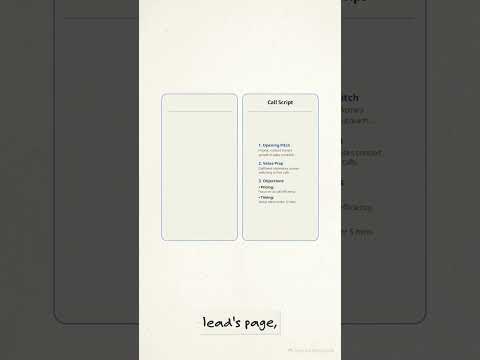
A dialer can record the whole call, keep the file where you control it and play it back when a carrier asks. It cannot decide which calls the rule covers, say the disclaimer for you or hold your enrollment records.
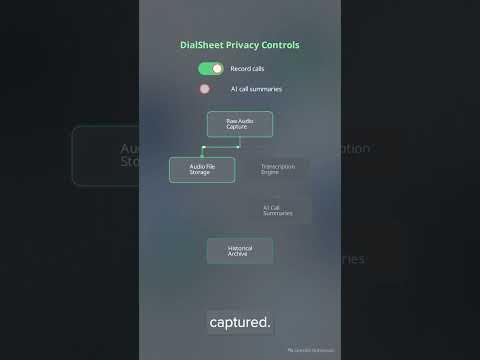
- Recorded from the answer. DialSheet records every answered call, on Power Dial, the dial pad and the parallel dialer, while the account’s “Record calls” switch is on. On a team the owner sets it for everyone, and reps cannot turn it off.
- Kept in your own Twilio account. On your own Twilio the recordings are yours, billed by Twilio at the rates above, and nothing in DialSheet deletes them; closing your DialSheet account leaves them where they are.
- Playback, transcript and download on Pro ($29/month per seat), on the call and on the lead, plus a CSV export of calls with transcripts.

Some dialers keep recordings for a fixed window: BatchDialer’s Starter plan, for example, keeps them 90 days, which is fine for coaching and short of six years. Before AEP, check where your dialer keeps the files and for how long. For who you may call in the first place, read Medicare permission to contact; for the tools, see the best CRM for Medicare agents, the best auto dialer for insurance agents, and the category rankings, the best power dialer software and the most affordable power dialers.
Who runs on it
An independent insurance agency and a nine-rep calling floor in our published case studies.
Medicare call recording questions
What are the Medicare call recording requirements?
Under 42 CFR 422.2274(g)(2)(ii), "all marketing and sales calls, including the audio portion of calls conducted via web-based technology, must be recorded and retained in their entirety for a minimum period of 6 years." The first 3 years must be audio; years 4 to 6 may be audio or "complete and accurate transcript recordings." The rule reaches third-party marketing organizations, which CMS defines to include independent agents and brokers, through their contracts with Medicare Advantage and Part D plans (423.2274 is the Part D twin). Read on eCFR, current to November 2, 2026. This is not legal advice.
How long do Medicare calls have to be recorded and kept, 6 years or 10?
Six years for the marketing and sales calls, since October 1, 2026. CMS's Contract Year 2027 final rule (91 FR 17583, April 6, 2026) cut the retention period from 10 years to 6 and said it takes effect October 1, 2026, with the beginning of 2027 plan-year marketing. The same rule keeps enrollment records at 10 years, and on a telephonic enrollment the recording of the enrollment portion is the enrollment record. Many FMO and vendor pages still say 10 years for everything; check your carrier contract, which can ask for longer.
Do Medicare Supplement calls need to be recorded?
Not by 42 CFR 422.2274 or 423.2274. Those rules apply to Medicare Advantage and Part D plans and the agents who sell them; Medicare Supplement (Medigap) policies are regulated by the states. Your carrier or FMO may still require recording, and a Medigap call that turns into a Medicare Advantage or drug plan discussion is a sales call for an MA or Part D plan, so record it from the start. This is not legal advice.
Do I need the beneficiary’s consent to record a Medicare call?
CMS requires the recording; state wiretap law decides whose consent you need to make it. Federal law (18 U.S.C. 2511(2)(d)) allows recording when one party consents, and you are a party. Some states require every party's consent: California Penal Code 632 punishes recording a confidential communication "without the consent of all parties." Agents usually announce at the start of the call that it is recorded, which is how a call to an all-party state is handled. Ask your compliance team which states you call into.
What does it cost to keep Medicare call recordings for 6 years?
On Twilio's list prices, read November 4, 2026: $0.0025 a recorded minute and $0.0005 per stored minute per month. An agent recording an example 1,000 minutes a month pays about $180 in recording fees and $1,314 in storage over six years if every file stays as audio; the storage bill reaches $36 a month by the end. Deleting audio after three years, once a complete and accurate transcript is kept in its place, holds storage to $18 a month and $981 over the six years. Your own minutes are the input; the example is only an example.
Which dialer records Medicare calls for an agent?
Any dialer that records the whole call and lets you keep the file for six years. Watch the retention: BatchDialer's Starter plan, for example, keeps recordings 90 days. DialSheet records every answered call into your own Twilio account, where the files stay until you delete them; it is free for one person, with a list of up to 500 leads and 500 calls a month, then $29/month per seat month to month, and playback, transcripts and a download button are on Pro. On a DialSheet-managed line the recordings sit in our carrier account and are released when the line closes, so a Medicare agent keeping six years should dial on their own Twilio or download every file. DialSheet does not make a call compliant; your script and your records do.
Read on November 4, 2026: 42 CFR 422.2274, 423.2274, 422.2267 and 422.2260 on eCFR (current to November 2, 2026); the Contract Year 2027 final rule, 91 FR 17583, in the Federal Register; 18 U.S.C. 2511 on Cornell LII; California Penal Code 632 on leginfo.legislature.ca.gov; Twilio’s US voice pricing. AEP runs October 15 to December 7. CMS rules change by annual rulemaking and carriers add their own; confirm with your FMO or compliance team. This page is orientation, not legal advice, and DialSheet does not make a call compliant. We build DialSheet.